On this page
Small business tax deductions cut your taxable profit before any tax rate is applied. To claim them, run every business cost through a separate account, record it as you go, sort it into the expense lines on Schedule C, then claim the three that sit outside Schedule C: half your self-employment tax, self-employed health insurance and retirement contributions. Two things changed for 2026: the business mileage rate rose mid-year from 72.5 to 76 cents a mile, and you only send a contractor a Form 1099-NEC once you pay them $2,000 or more. The worked examples below show what each deduction is actually worth.
This guide covers the US federal rules for sole proprietors and single-member LLCs, checked against IRS sources in October 2026. Your situation may differ, so confirm anything significant with a tax professional before you file.
Most lists of small business deductions tell you what exists. Very few tell you how to actually claim them, what each one is worth in cash, or which mistakes quietly cost people the deduction they were entitled to. That gap is where most of the overpaid tax comes from. Not from obscure loopholes, but from ordinary expenses that never got recorded, sorted or claimed.
When you work for an employer, tax is worked out for you. When you work for yourself, you pay self-employment tax of 15.3% on your net earnings on top of income tax, because you pay both the employer's and the employee's share of Social Security and Medicare. Every legitimate deduction lowers the profit that all of those rates apply to.

How to Claim Small Business Tax Deductions in Six Steps
- Confirm where your deductions go. If you are a sole proprietor or a single-member LLC, your business income and expenses go on Schedule C of your Form 1040. Other structures file differently, and the LLC vs sole proprietorship comparison covers how the choice changes your taxes.
- Run business money through its own account. One account for everything the business earns and spends. It is the single habit that makes every other step possible, because it turns your bank statement into a first draft of your deduction list.
- Record expenses as they happen. Photograph receipts the day you get them and log business miles on the day you drive them. The IRS expects records made at the time, and a year reconstructed from memory in April is the weakest evidence you can offer.
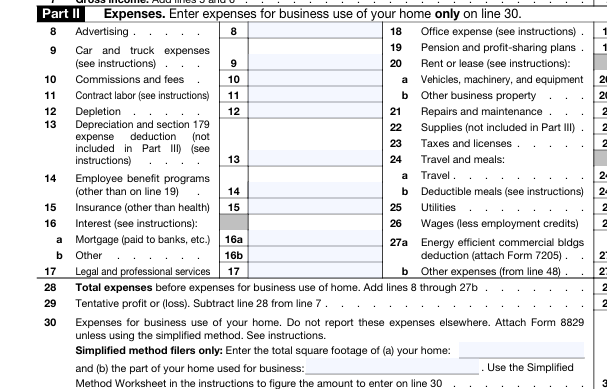
- Sort every expense into a Schedule C line. Part II of Schedule C has a line for each type of ordinary business expense: advertising, car expenses, insurance, legal and professional services, office expenses, rent, supplies, travel, meals and more. A chart of accounts that mirrors those lines makes this almost automatic.
- Claim the three deductions that live outside Schedule C. Half of your self-employment tax, self-employed health insurance premiums and retirement plan contributions are claimed as adjustments to income rather than as business expenses. They are the ones most often missed, because they never appear in your business bookkeeping.
- Keep the records for as long as the IRS can ask. That is generally three years after you file, six if income was understated by more than 25%, and indefinitely if a return was never filed. Keeping everything for seven years covers every ordinary case.
Aziz's take: Step two does more work than the other five combined. Almost every missed deduction I have seen traces back to business and personal money sharing an account, because then every expense needs a decision at year end instead of being obvious the day it happened. Open the separate account before you worry about any single deduction. The rest of this list gets easier the moment you do.
What Changed for 2026
Several rules moved this year, some of them mid-year. If you are working from an older list, these are the ones to update.
| Rule | What it is now | Source |
|---|---|---|
| Business mileage rate | 72.5 cents a mile from 1 January to 30 June 2026, then 76 cents a mile from 1 July, raised mid-year because of fuel prices | IRS, IRB 2026-29 |
| Form 1099-NEC threshold | $2,000 for payments made from 2026, up from $600 | IRS 1099 instructions |
| Bonus depreciation | 100%, made permanent for qualifying property acquired after 19 January 2025 | IRS |
| Section 179 limit | $2,560,000 for tax years beginning in 2026, reduced once total equipment placed in service passes $4,090,000 | IRS Publication 946 |
| Retirement limits | 401(k) employee deferral $24,500, catch-up for 50 and over $8,000, total contribution cap $72,000 | IRS, IRS SEP limits |
What Is Tax-Deductible for a Small Business Owner?
The test the IRS applies is that an expense is ordinary and necessary for your business: common in your line of work and helpful to it. These are the deductions most one-person businesses can use, with the rule that most often trips people up.
| Deduction | What you can claim | The rule that trips people up |
|---|---|---|
| Advertising and marketing | 100% | It must promote the business, not you personally |
| Business meals | 50% | Note who you met and why; IRS Publication 463 covers the details |
| Business insurance | 100% | Liability and business property cover qualify; personal life insurance does not |
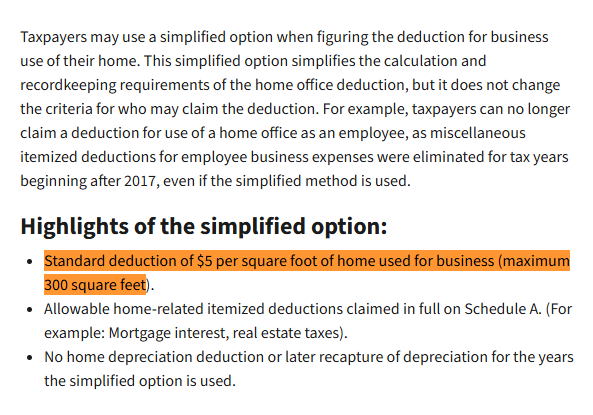
| Home office | $5 per sq ft up to 300 sq ft, or a share of actual costs | The space must be used regularly and exclusively for business |
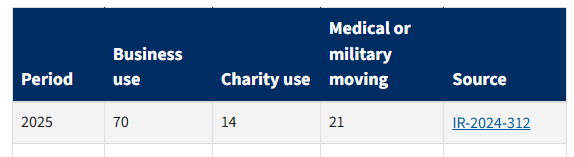
| Vehicle | 72.5 or 76 cents a mile depending on the half of 2026, or actual costs | Driving between home and a regular workplace is commuting and never counts |
| Contract labor | 100% | File a 1099-NEC for anyone you pay $2,000 or more in 2026 |
| Professional services | 100% | Includes the accountant who prepares your business return |
| Education | 100% | It must maintain or improve skills for your current business, not train you for a new one |
| Software and subscriptions | The business-use share | Tools you also use personally are only partly deductible |
| Phone and internet | The business-use share | Claiming 100% of a phone you use personally is a common overclaim |
| Bank and payment fees | 100% | Easy to miss because each one is small |
| Business travel | 100%, meals at 50% | The trip must take you away from your tax home overnight |
| Equipment | Expensed at once under the de minimis rule, Section 179 or bonus depreciation | Items up to $2,500 each can usually be expensed straight away |
| Rent | 100% of business space | A coworking membership counts; your home rent only through the home office rules |
| Startup costs | Up to $5,000 in your first year | Reduced once costs pass $50,000, with the rest spread over 180 months |
| Half of self-employment tax | 50% of what you paid | Claimed as an adjustment to income, not on Schedule C |
| Self-employed health insurance | Premiums for you, your spouse and dependents | Not allowed for months you could join an employer plan, including a spouse's |
| Retirement contributions | Solo 401(k) or SEP-IRA, up to $72,000 in total | Reduces income tax only, not self-employment tax |
If you want to see where these show up in your figures before tax time, reading your profit and loss statement line by line is the quickest check that nothing has been left out.
Worked Examples: What Each Deduction Is Actually Worth
A deduction is not a refund. It lowers the profit your taxes are calculated on, so its cash value depends on your rates. These examples use round assumptions so the method is visible; substitute your own numbers.
What a $1,000 business expense saves. On Schedule C, a $1,000 expense reduces both taxes on your profit. Self-employment tax falls by about $141, because the 15.3% rate applies to 92.35% of net earnings. If you are in the 22% income tax bracket, income tax falls by roughly another $200 once the knock-on effect on your self-employment tax deduction is allowed for. Together that is around $345, or about a third of the expense. Other factors, such as the qualified business income deduction, can move it a little either way.
Home office, simplified or regular. Say you rent a 1,000 sq ft home, pay $24,000 a year in rent and utilities, and use a 200 sq ft room only for work. The simplified method gives you 200 x $5 = $1,000 with no receipts. The regular method gives you 20% of $24,000 = $4,800, but needs Form 8829 and records of every cost. For a renter in an expensive area, the extra paperwork is usually worth it. For a small space in a cheaper home, the simplified method often wins on effort alone.
Mileage across the 2026 rate change. A weekly client visit 25 miles away is 50 miles a round trip. For the first 26 weeks of 2026 that is 1,300 miles at 72.5 cents, or $942.50. For the second 26 weeks it is 1,300 miles at 76 cents, or $988. The year's deduction is $1,930.50, which is why your mileage log needs dates as well as distances this year.
A Solo 401(k) on $100,000 of profit. Self-employment tax on $100,000 is about $14,130, and half of it, about $7,065, comes off your earnings for this calculation, leaving about $92,935. The employer contribution for a self-employed person is effectively 20% of that figure, about $18,587. Add the $24,500 employee deferral and you can put away about $43,087, well under the $72,000 cap. At a 22% income tax rate that saves around $9,480 in income tax this year. It does not reduce your self-employment tax, which is calculated before retirement contributions come off.
What Vehicle Expenses Are Tax-Deductible?
You can deduct the business use of a vehicle in one of two ways. The standard mileage rate multiplies your business miles by the IRS rate, which covers fuel, insurance, repairs and depreciation in a single figure. The actual expense method adds up those costs and claims the business-use share. Parking fees and tolls for business trips are deductible on top of the standard rate, according to IRS Publication 463.
Business miles include driving to a client, between job sites, or to pick up supplies. Driving from home to your regular place of work is commuting and is never deductible, however far it is. For every trip, log the date, the destination, the business purpose and the miles.
The Mistakes That Cost Small Businesses Their Deductions
- Counting the commute. Miles from home to a regular office are personal, however much business happens at the other end.
- A home office that is also a bedroom. The space has to be used exclusively for business. A desk in a room you sleep in does not qualify.
- Rebuilding the mileage log in April. A log written at year end from memory is the first thing to fall apart under questioning. Log trips as you make them.
- Mixing personal and business money. It turns every expense into a judgement call and makes legitimate deductions harder to prove.
- Expecting retirement contributions to cut self-employment tax. They reduce income tax only. Plan your cash flow for the self-employment tax you will still owe.
- Working from an out-of-date list. The 1099-NEC threshold is now $2,000 and the mileage rate changed in July. Last year's checklist will get both wrong.
- Claiming 100% of something you also use personally. Phones, internet and software are deductible in proportion to business use, not in full.
Aziz's take: The deductions people miss most are not the clever ones. They are half of the self-employment tax and health insurance premiums, because neither appears anywhere in your business bookkeeping. If you do your own return, check those two specifically every year. They are often worth more than every small receipt in the shoebox put together.
Small Business Tax Deductions Checklist for 2026
Work through it before you file. Each line is a deduction or a habit that protects one.
| Item | Rule |
|---|---|
| Set up | |
| Separate business account | DONE / TO DOHabit |
| Receipts captured as you go | DONE / TO DOHabit |
| Mileage logged on the day | DONE / TO DOHabit |
| Schedule C expenses | |
| Advertising and marketing | AMOUNT100% |
| Business meals | AMOUNT50% |
| Business insurance | AMOUNT100% |
| Home office | SQ FT OR ACTUAL SHAREExclusive use |
| Vehicle | MILES JAN-JUN / JUL-DEC72.5 / 76 cents |
| Contract labor | AMOUNT1099 at $2,000 |
| Software, phone and internet | BUSINESS SHAREBusiness % |
| Equipment | AMOUNTDe minimis / 179 |
| Outside Schedule C | |
| Half of self-employment tax | AMOUNTAdjustment |
| Self-employed health insurance | PREMIUMSAdjustment |
| Retirement contributions | AMOUNTIncome tax only |
| Before you file | |
| 1099-NEC filed for each contractor paid $2,000 or more | DONE / N/A2026 rule |
| Startup costs claimed in the first year | DONE / N/AUp to $5,000 |
| Records stored for at least three years | DONE / TO DOSeven is safer |
For the bigger picture of how these deductions fit into your finances across the year, the small business finance guide covers the full cycle from bookkeeping to filing.